
Transpond started as a way to send a good email. The job was to turn it into a marketing platform without losing what made the email side good.
Transpond is a marketing platform for small businesses. It started out sending email campaigns and now covers forms, landing pages, SMS, social and a shared inbox, so a small team can find, win and talk to customers from one place. I led design across the product and helped shape its strategy, from how new channels fit together to how they were priced.

Challenge
When I joined, Transpond was an email marketing tool, and a good one at that. Customers could build a campaign, send it to the right people, and see how it did.
But email was only one part of what our customers were trying to do. To capture leads they needed forms and landing pages. To follow up they needed SMS and social. To answer the people who replied they needed somewhere to have a conversation. Most of them were piecing it together with three or four other tools, each with its own bill.
Every new channel could make Transpond more useful, or it could turn a focused email platform into a cluttered suite that did six things badly.
Strategy
We grew Transpond around the contact, not the channel. Whether someone filled in a form, visited a page, opened an email or started a chat, it all ended up on the same record. Each new channel was built on what was already there, so it felt like part of Transpond rather than a new product to learn.
Transpond also had to fit with Capsule. Capsule is the CRM and Transpond is the marketing tool, so every new way of winning a contact in Transpond also helped fill Capsule’s pipeline.
Today they’re separate products with a deep integration. Over time, customers will want something closer to one tool with one simple price. So every decision about Transpond’s future had to make sense for both products.
Approach
I led design across the product, but much of my work happened before any screens were drawn. I helped shape how Transpond would grow from an email tool into a multi-channel platform: which channels to add, what each one meant for the product as a whole, and how it all fitted with Capsule.
That reached into pricing too. Every new channel raised the same questions: which tier it belonged in, what it should cost and who it might upset. I helped answer them alongside deciding what to build, how it should work and how to release it in pieces we could learn from.
Over time I took on more product manager responsibilities. I ran customer research and interviews myself, speaking to customers to understand how they marketed their business, what they were paying for elsewhere and where Transpond fell short. What I learned fed straight into the roadmap, not just the designs.
Trade-offs
The hardest calls were about how far to go with each channel. Every one had a specialist competitor that did far more, and we didn’t try to match them. Instead we asked what a small business needed to stop paying for the other tool.
Conversations
Across Capsule and Transpond, we had one shared goal: get more leads into Transpond, so more of them reach Capsule as opportunities.
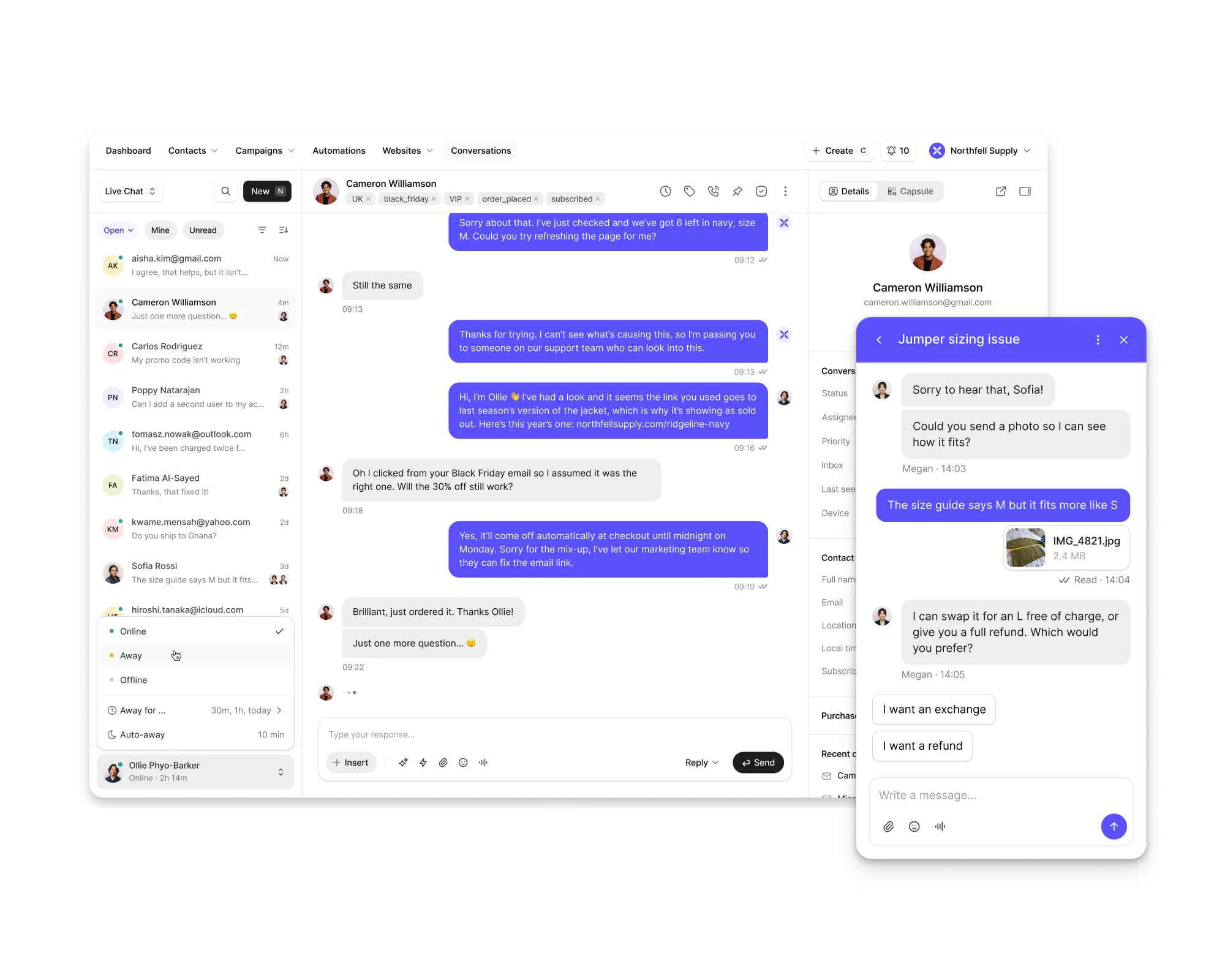
Transpond already had a head start. Its web tracker, a small script customers add to their site, was already in place. We could use it to put live chat on a customer’s website with no extra development work. They would just switch it on in Transpond. Every chat would become a new contact, ready for the mailing list.
Email would act as a fallback, catching visitors who had left and anyone who preferred to write in. Both email and chat fed one inbox. It needed to work for a whole team, and to hold a proper support conversation, not just a quick reply.
One stab at an answer
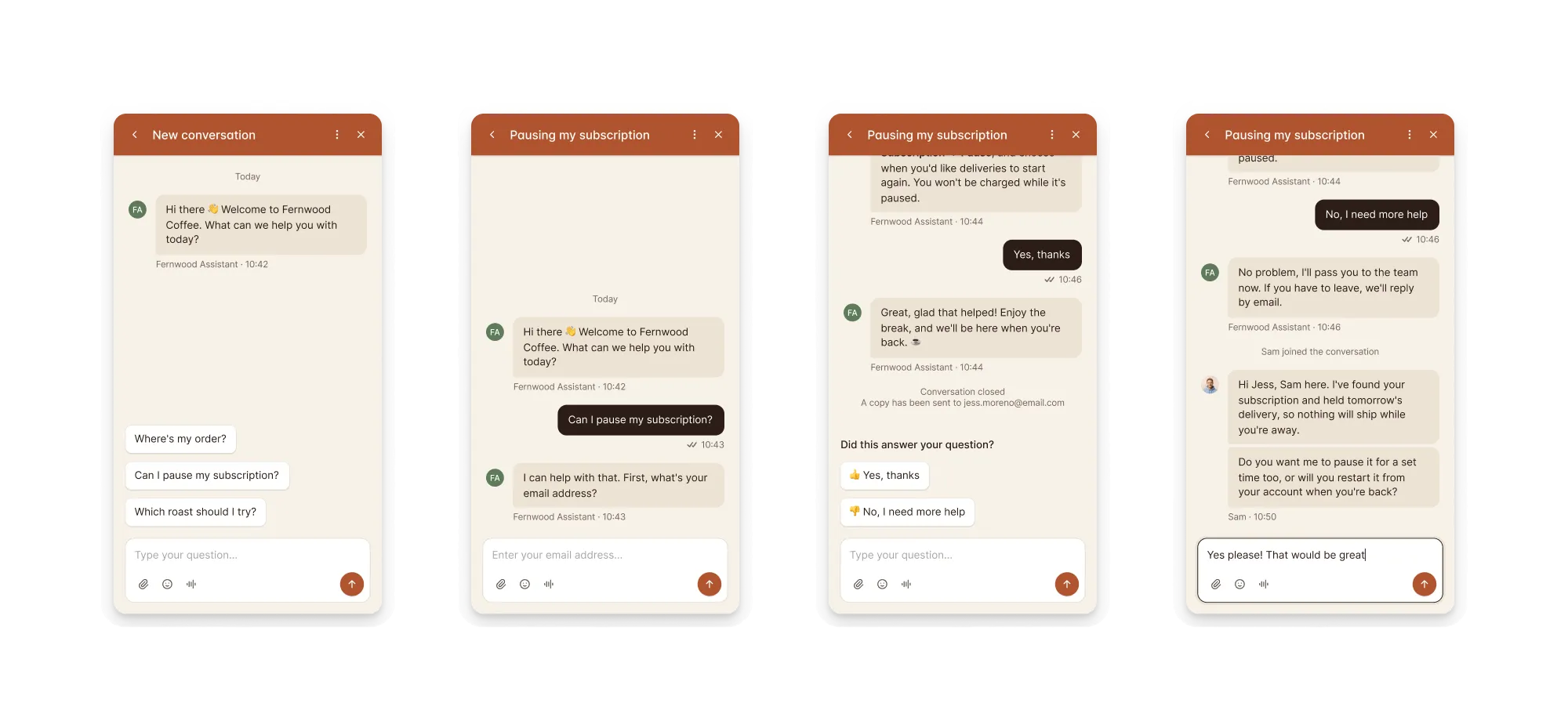
One notable call was how to integrate AI. We wanted to give customers near-instant responses to their queries, but not keep them in a loop of endless back-and-forth. Many chat tools put a bot in front and make people fight their way past it to reach a person. We didn’t want our customers’ customers stuck in that loop.
So we decided AI would get one attempt. It would reply to the first question, then ask whether that answer was enough. If the visitor said yes, the conversation was done. If not, it went straight to a human, with no second round with the bot.
Pricing and packaging
A product that does more needs pricing to match. I helped set the prices themselves, introducing a new tier, and helped decide which features sat in each. The aim was for every tier to feel complete on its own, while leaving a clear reason to move up.
Changing prices for a product people already pay for carries real risk. We analysed existing customers to see how each option would land, so the new structure wouldn’t cost us much revenue from the people who were already with us.
Active marketing contacts
Transpond is priced by active contacts. That created a problem for Capsule customers signing up. A business might have 100,000 contacts in its CRM, but only 10,000 it actually markets to. Bring them all across and the first price they see is for 100,000, and they leave before they’ve started.
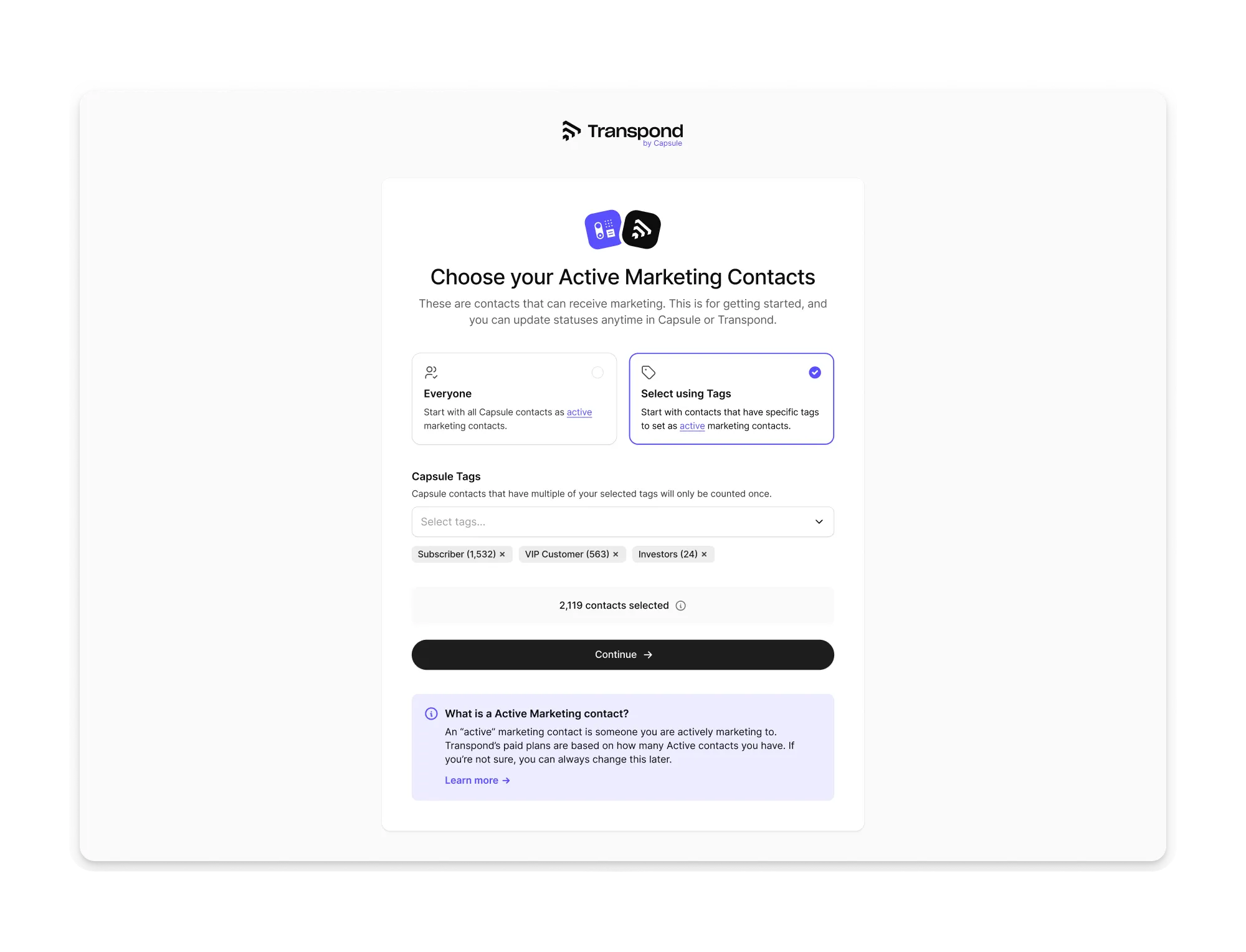
So we drew a clear line between the two. During setup, customers choose which Capsule contacts are active marketing contacts, either everyone or only those with certain tags. From the start, the price reflects the 10,000, not the 100,000. They can change a contact’s status at any time in Capsule or Transpond, but the distinction stays clear in both products, because it decides what they pay.
Forms, then Landing Pages
Transpond’s forms had become self-hosted landing pages in all but name. Over the years they’d taken on so many jobs that they were hard to set up and convoluted to explain.
Pricing and packaging gave us a way to untangle them. We set out three levels, each one a step up from the last:
- Capsule sign-up forms, a built-in integration with limited styling. It’s a simple way to capture details straight into Capsule.
- Transpond sign-up forms, still a form on a page, with more control over how it looks and with access to advanced automations.
- Transpond landing pages, a full page built for marketing.
The difference between them was the visitor. A form, in Capsule or Transpond, is for someone who has already decided to share their details. A landing page has to win them over: explain the offer, build trust, and earn the sign-up.
One editor for everything
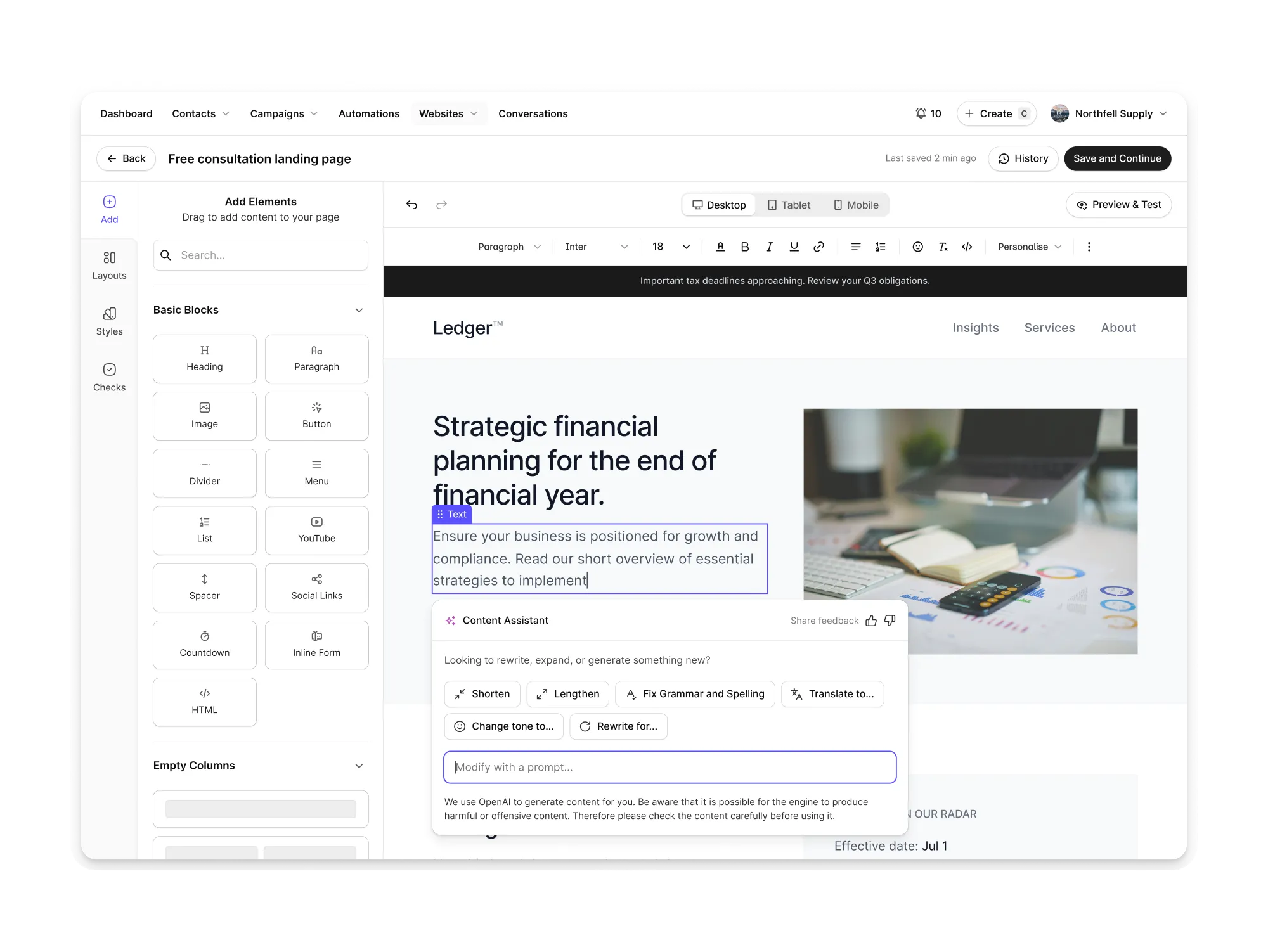
Landing pages needed a proper editor, and Transpond already had two: the original email editor and a modified version for forms. Rather than build a third, we turned them into one reusable system for emails, forms and landing pages. Learn it once and you can build all three, and every improvement lands everywhere.
Most of the design work was deciding what to leave out. We worked out the minimum someone needs to build a landing page: which blocks, how they behave, and how a page holds up on desktop, tablet, and mobile. Each new control made the editor more powerful and harder to understand, so it had to earn its place. Good starter templates did a lot of the work, so nobody had to begin with a blank page.
Approval flow
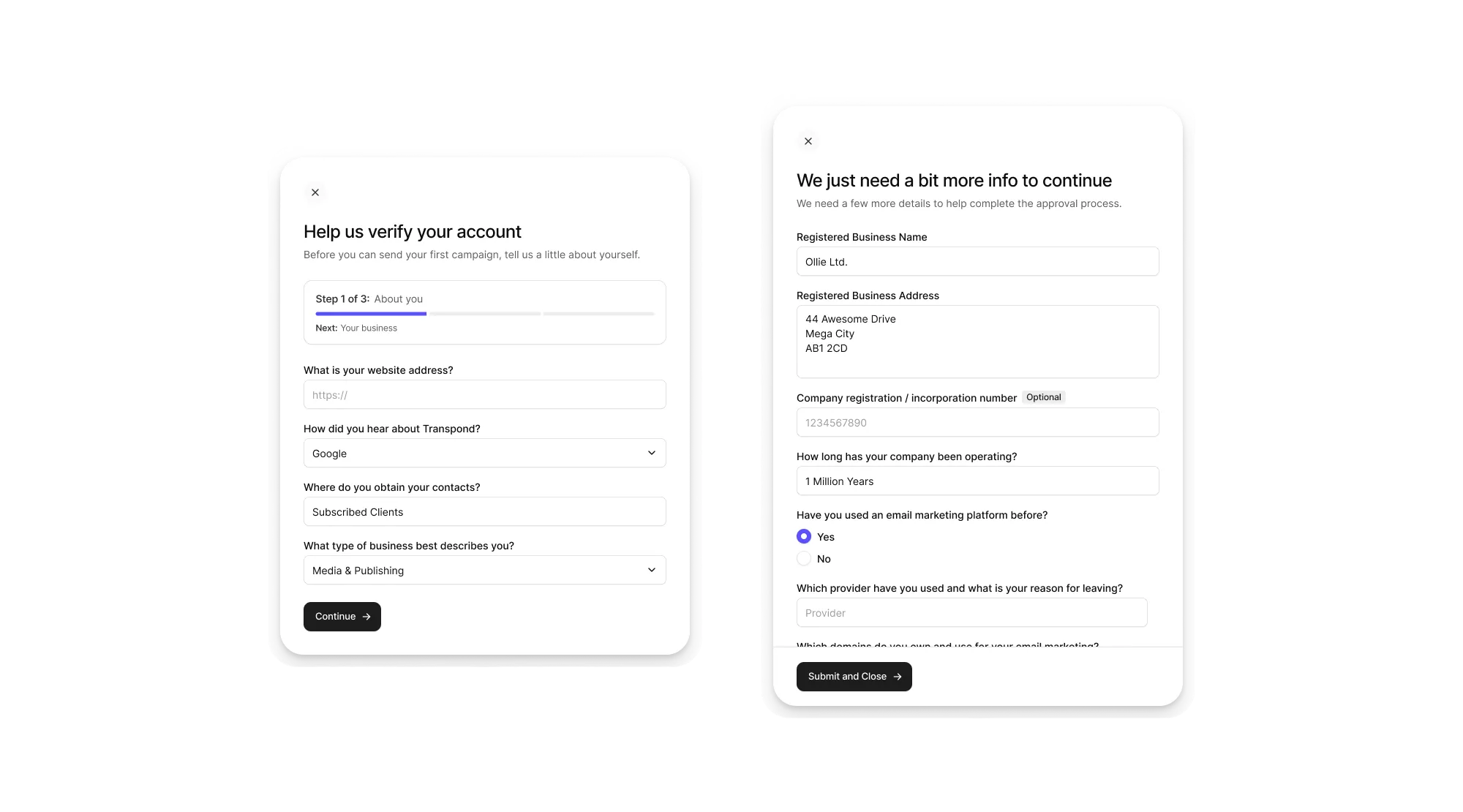
An email platform can’t let a brand-new account send hundreds of thousands of emails the moment it signs up. One bad sender can damage the reputation every other customer relies on to reach the inbox. So every new account needed approving before it could send.
We asked just before their first campaign, so nobody was blocked before seeing what Transpond could do. A few questions, combined with what we already knew, such as their domain, gave each account a ranking. AI took over the checks support had done by hand, so most customers were approved within 10 to 20 seconds, and only the rest went to the team for review.
Deliverability
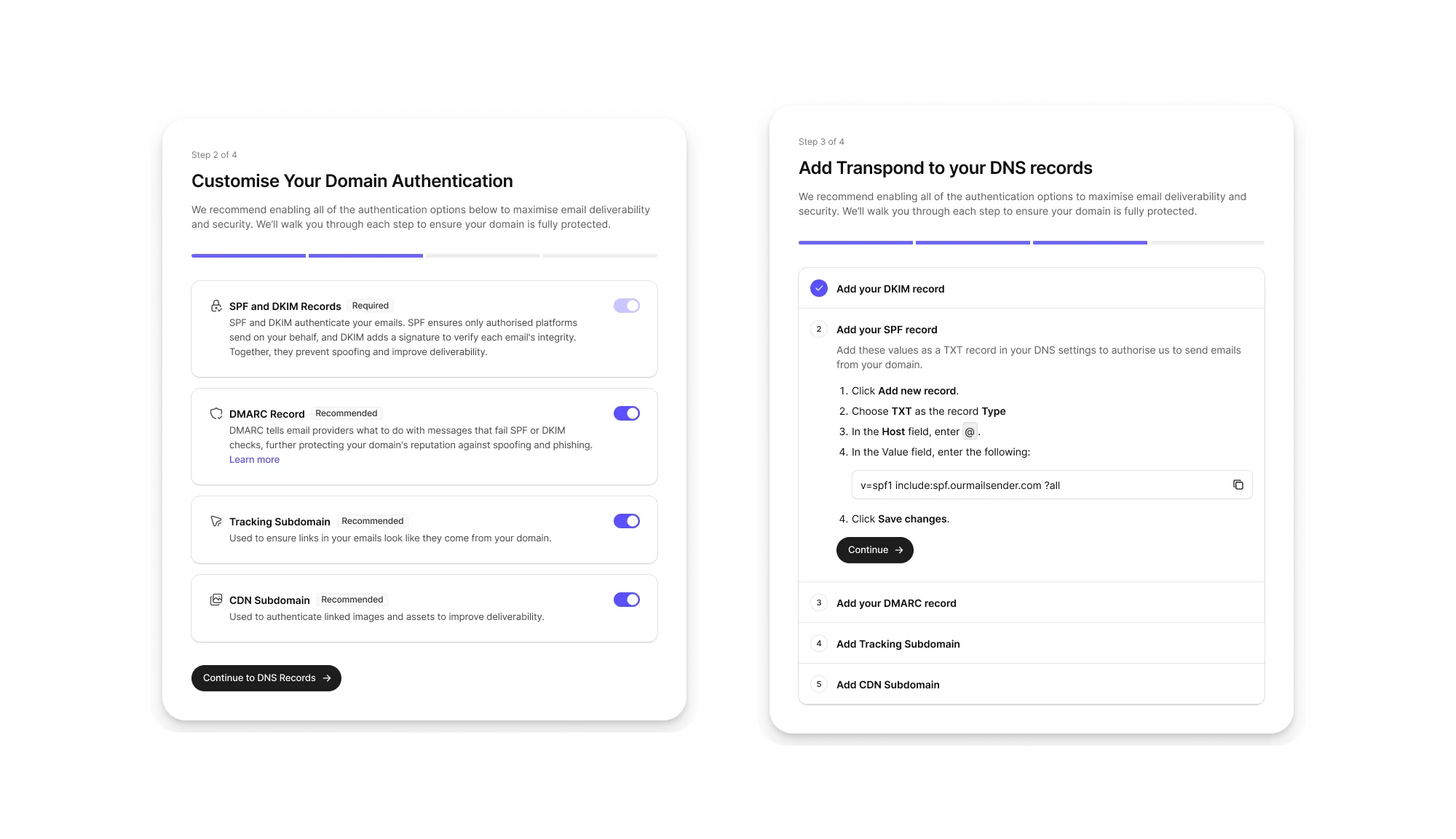
Every email marketing platform runs into the same problem. To reach the inbox, emails need to come from an authenticated domain, so the platform can send on the customer’s behalf under their own name. That means adding CNAME and TXT records to their DNS. For most of our customers, that’s a foreign language.
I designed a new authentication flow for people with little technical experience.
SMS and Social Campaigns
Not every channel was about winning leads. Some were about making Transpond the one place a small business could run all its marketing, so a campaign could reach people wherever they were.
SMS launched in the UK to deliver the messages to contacts. Customers could send both marketing and transactional messages, like order orbooking confirmations.
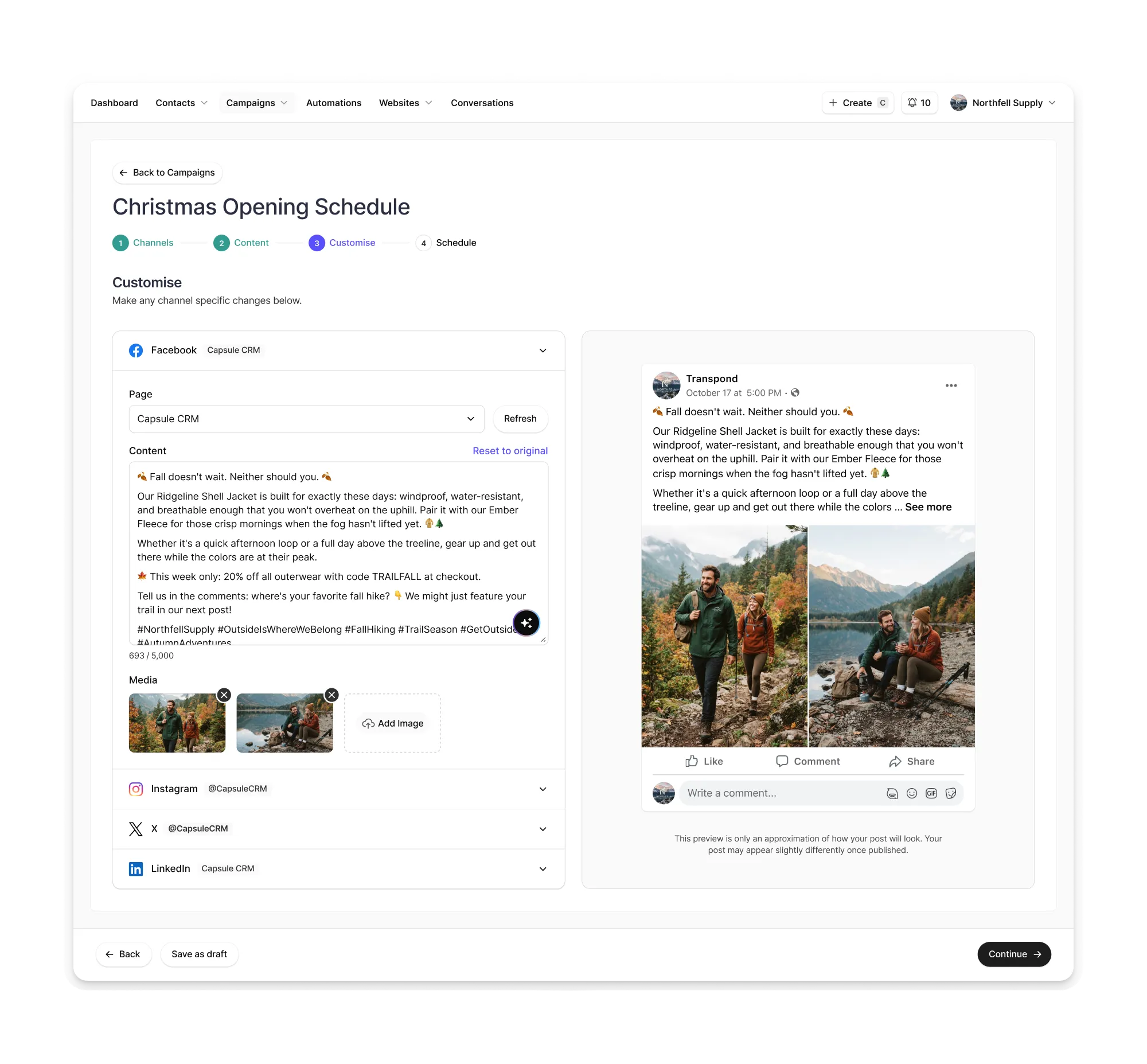
Social Campaigns let customers write a post once, tailor it for Facebook, X, Instagram, and LinkedIn, to match their individual audience and platform requirements. We kept to a simple create, customise and schedule flow, to keep social on the same calendar as everything else.
Reflection
Transpond taught me that growing a product is mostly about deciding what it won’t be. Each new channel was a chance to become a worse version of a tool someone else had already built. The work was in finding the version that only made sense inside Transpond.
It also changed how I work. Leading the team meant spending less time in the details myself and more time making sure the right problems reached the people best placed to solve them.
The best features we shipped were the ones that made the rest of the product better too. A shared editor made emails better while it made landing pages possible. Conversations made every contact record more useful. That’s the test I’d apply to the next channel as well.